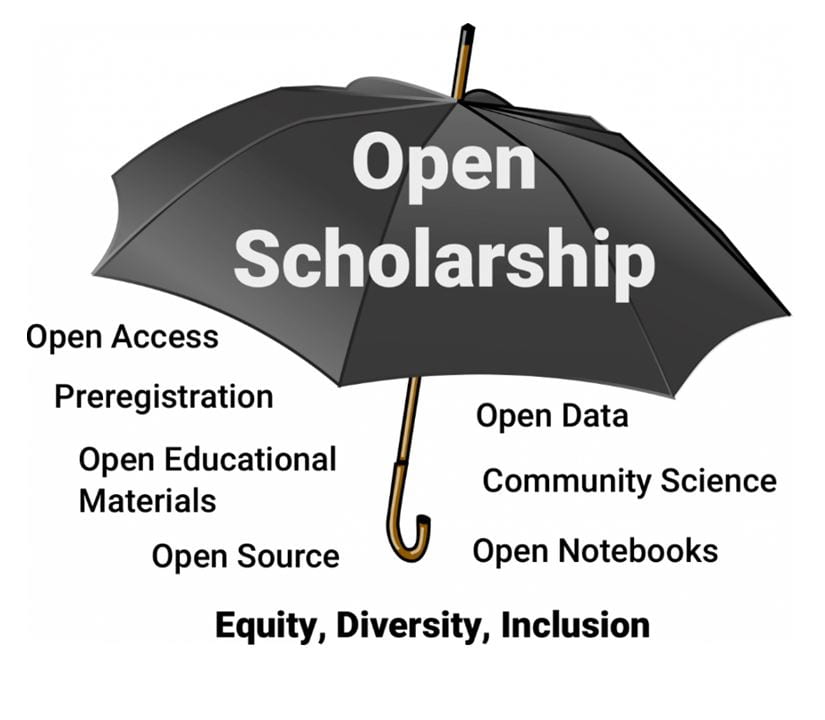
EDI in Open Access

EDI umb
Source: Laura Klinkhamer, BMJ blogs, 2022. 

EDI in Open Research

We want to cultivate an excellent research culture at UWL. Open Research is central to our vision, but beyond that, we want to ensure that everyone in our research community can produce work in an inclusive, supportive and equitable environment.

What is EDI?

EDI (equality, diversity & inclusion) interventions seek to address systematic underrepresentation. The development organisation Diversity for Impact provides some excellent summaries of the terms discussed which you can access here.

In a research context, this could look like unequal representation in leadership, grant allocations or citations. By promoting inclusion, we can help to reduce the bias and discrimination that individuals or groups might face in academia when trying to make their research open and accessible to all. UKRI (UK Research and Innovation) published an extensive report on EDI in the context of research and innovation. It provides a summary of the major issues and can be accessed here.

Like Open Research practices, EDI helps us to build a more diverse and supportive community that utilises knowledge from a range of backgrounds and experiences. This helps our knowledge output at UWL to be better representative of actual society, break down social barriers, and better address global challenges.

EDI broadly applies to those who identify as having any of the nine protected characteristics. Under the Equality Act 2010, the nine protected characteristics are: age, disability, gender reassignment, marriage and civil partnership, pregnancy and maternity, race, religion and belief, sex and sexual orientation. However, this list of characteristics is not definitive. For a comprehensive definition of EDI terms, the government of Canada has a well maintained guide put together by a dedicated, interdepartmental committee which you can access here.

What can be done in Open Research to promote EDI?

There’s much work to be done by institutions and research organisations to develop specific strategies and priority areas that address clear equity gaps. UWL produces annual reports on EDI to transparently and openly communicate policy and proactively share data, evidence, and findings. For more information, you can access UWL’s dedicated webpage on equality, diversity and safeguarding here.

Individuals can adopt open scholarship practices such as publishing data, pre-prints and notebooks online from the outset of their research journey to widen access and participation. It is also important that accessible resources such as open-source software, community science networks and open educational resources are well used, developed and promoted. Lastly, disseminating work as widely as possible through open access journals, repositories and academic social networking sites helps to reduce barriers to access for all.

The best research environment is one that is conducive to supporting mutual growth through inclusion, access and encouragement. Open research practices and EDI are complementary approaches to better addressing the global issues affecting us now and into the future.
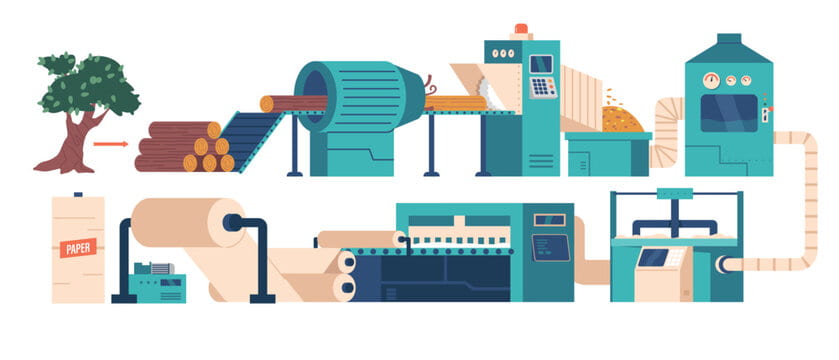
Paper Mills


Paper mill clip art

Paper Mills are organisations that produce fraudulent journal articles which appear at first glance to be genuine, and sell ‘authorship’ to those who are looking to inflate their publication records. This is an increasing problem and one which threatens to significantly pollute the research record.  Recently, Wiley has had to terminate journal titles and then discontinue their Hindawi imprint because of extensive infiltration by paper mill activity: https://retractionwatch.com/2023/12/06/wiley-to-stop-using-hindawi-name-amid-18-million-revenue-decline/ .

Some mills have gone as far as attempting to bribe editors to allow their fake papers easy publication: https://www.science.org/content/article/paper-mills-bribing-editors-scholarly-journals-science-investigation-finds. The excellent Blog ‘Retraction Watch’ keeps an eye on papers retracted when publishers are alerted to their fraudulent nature. here they discuss how the journal Naunyn-Schmiedeberg’s Archives of Pharmacology, deals with Paper Mills, including 20 ways to spot them: https://retractionwatch.com/2021/02/09/20-ways-to-spot-the-work-of-paper-mills/ .

 We will include links about this problem in future Blog entries together with other relevant links in publication ethics and integrity.

Ethics in Research

Image Source: MIT news

In recent years, Open Research practices have become a dominant feature of the scholarly communication landscape. However, the large-scale uptake of these practices creates new challenges for researchers and publishers alike. It is the responsibility of all practitioners to maintain ethics and standards in Open Research as the movement grows.

UK Research and Innovation’s definition of research integrity summarises the ethical standards that researchers should apply to their work:

High integrity in research is the result of upholding the values of honesty, rigour, transparency and open communication, care and respect for those involved in research. It supports accountability for a positive research environment. (UKRI, 2024)

Maintaining these ethics and standards is essential, not least given declining levels of trust in scientific publishing and changing perceptions of academic integrity. Misinformation and misconduct are rife, and the problems have been exacerbated by the rise of Artificial Intelligence in academia. Increasingly sophisticated AI tools are utilised by the paper-mill industry to sell generic manuscripts and produce plagiarized content that scrapes excerpts
from legitimate pieces of research.

To ensure you are following a high standard of integrity within Open Research practice, you should:

• Never fabricate or manipulate data. Using a Data Management Plan (DMP) can help you to properly record and account for your data. (DMPs can be uploaded onto the UWL repository for more information see here)

• Properly cite and acknowledge other works. This will help you to avoid plagiarism and help highlight your sources for others to refer to.

• Make your work available and accessible as soon as possible via the UWL repository (Green Open Access Route).

Essentially, good practice in Open Research amounts to communicating findings accurately and honestly and properly acknowledging the works of others. For any more guidance, the Open Research team is always on hand to help. Get in touch if you’d like to know more.

Guerilla Open Access

This week, we’re sharing a video put together for Open Access Week in late October that hasn’t had a home until now!

Check it out and make your own mind up on issues around Guerilla Open Access. In 2024, it looks like publishers are upping the ante in their fight against sites like z-library by using DMCA takedown requests so it’ll be interesting to see how things develop this year. You can read more about that here. 

Get in touch if there are any more topics you’d be interested in seeing the Open Research team cover! See our last post here.